

For growing enterprises and large corporations, the default assumption has long been that keeping every administrative function in-house guarantees better control and oversight. However, managing non-core operational tasks internally often incurs massive, unwanted overhead without delivering proportional strategic value.
Rather than overloading internal departments with routine tasks, modern organizations are shifting toward a hybrid operational model. By keeping core strategic direction in -house while delegating essential support functions to specialized third party providers, companies can streamline their back-office outsourcing, enforce reporting accuracy, and optimize operational expenses.
What to Keep In-House vs. What to Outsource
Deciding what to delegate starts with a clear division between core differentiators and non-core support functions.
Functions Kept In-House
Functions that directly define your competitive advantage should remain under your direct internal management:
- Strategic Planning: Setting long -term corporate vision, market positioning, and capital allocation.
- Core Client & Partner Relationships: Nurturing high -value executive connections and strategic alliances.
- Proprietary IP Development: Designing trade secrets, patents, and core technological innovations.
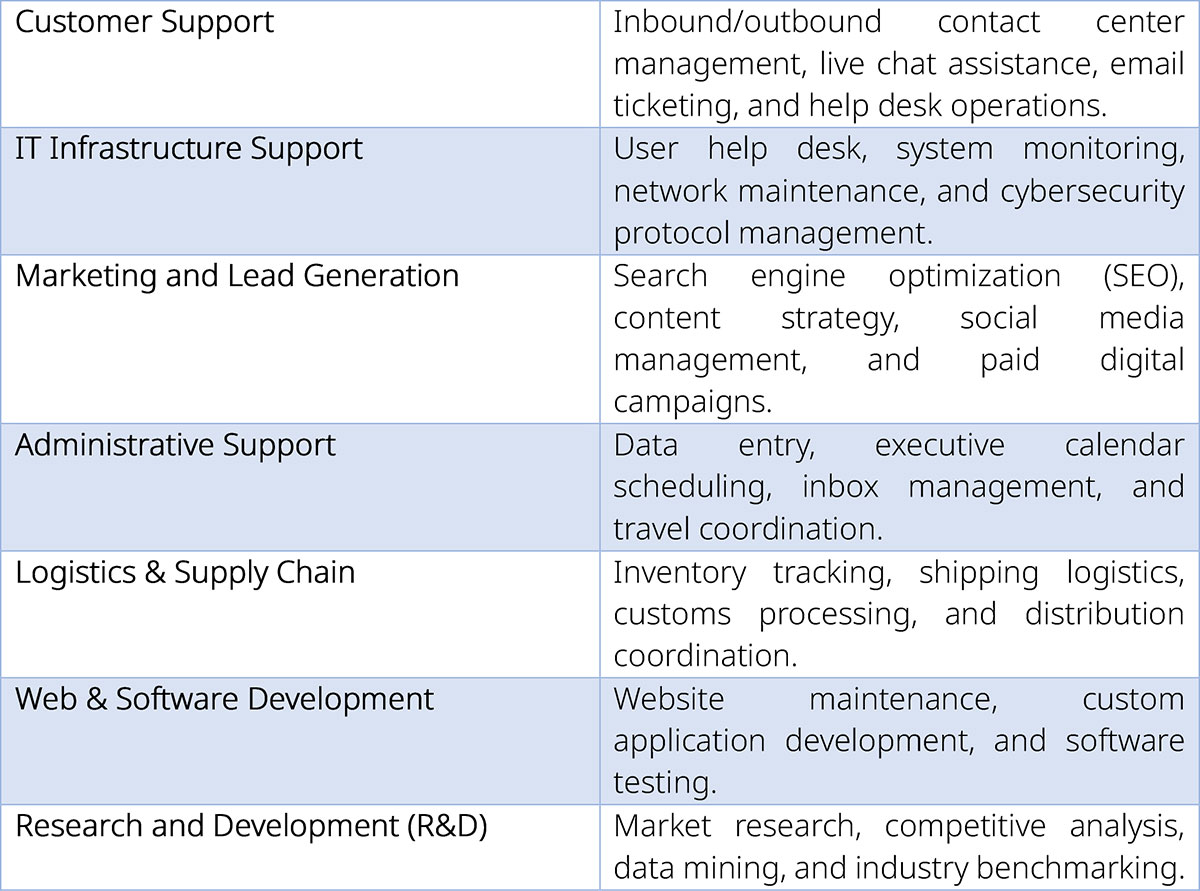
Commonly Outsourced Back-Office Functions
Routine, process-driven functions that require specialized execution, continuous compliance, or 24/7 availability are ideal candidates for outsourcing: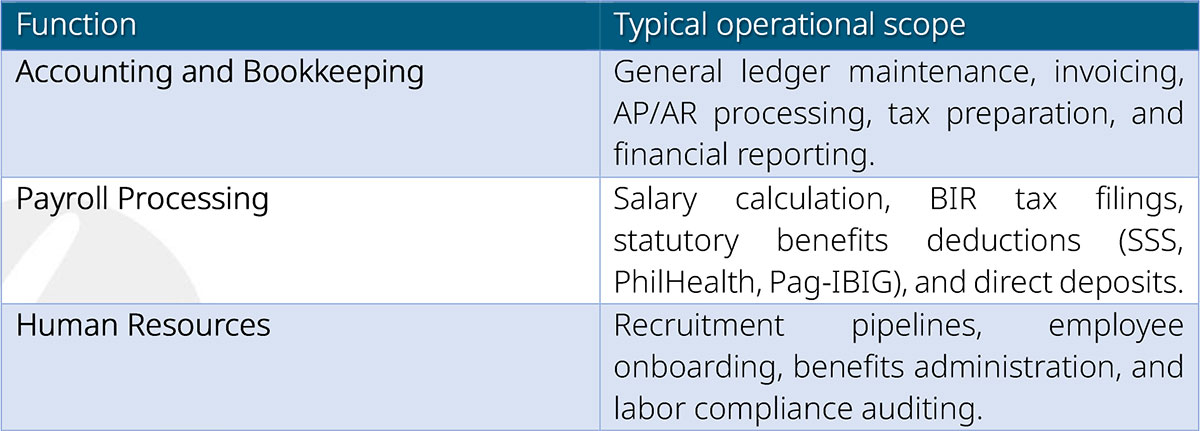
Real-World Proof: How Global Leaders Scale Through Outsourcing
Outsourcing non-core functions is not merely a tactic for early-stage startups; it is a core strategy utilized by world-class enterprises to unlock efficiency, enter new markets, and drive innovation:
- Airbnb: Outsourced its global customer support operations to the Philippines, securing 24/7 multilingual coverage that substantially increased its Net Promoter Score (NPS) and user retention rates.
- Microsoft: Combined outsourced customer support operations with generative AI integration, realizing a 31% improvement in first-call resolution rates.
- Delta Air Lines : Drastically reduced IT operational expenditures by combining strategic outsourcing with enterprise cloud transformation, helping the carrier successfully navigate back to financial stability.
- Walmart: Partnered with Infosys to streamline financial processing accuracy and accelerate monthly ledger closings across massive, multi-billion -dollar transactional datasets.
How to Choose the Ideal Outsourcing Partner
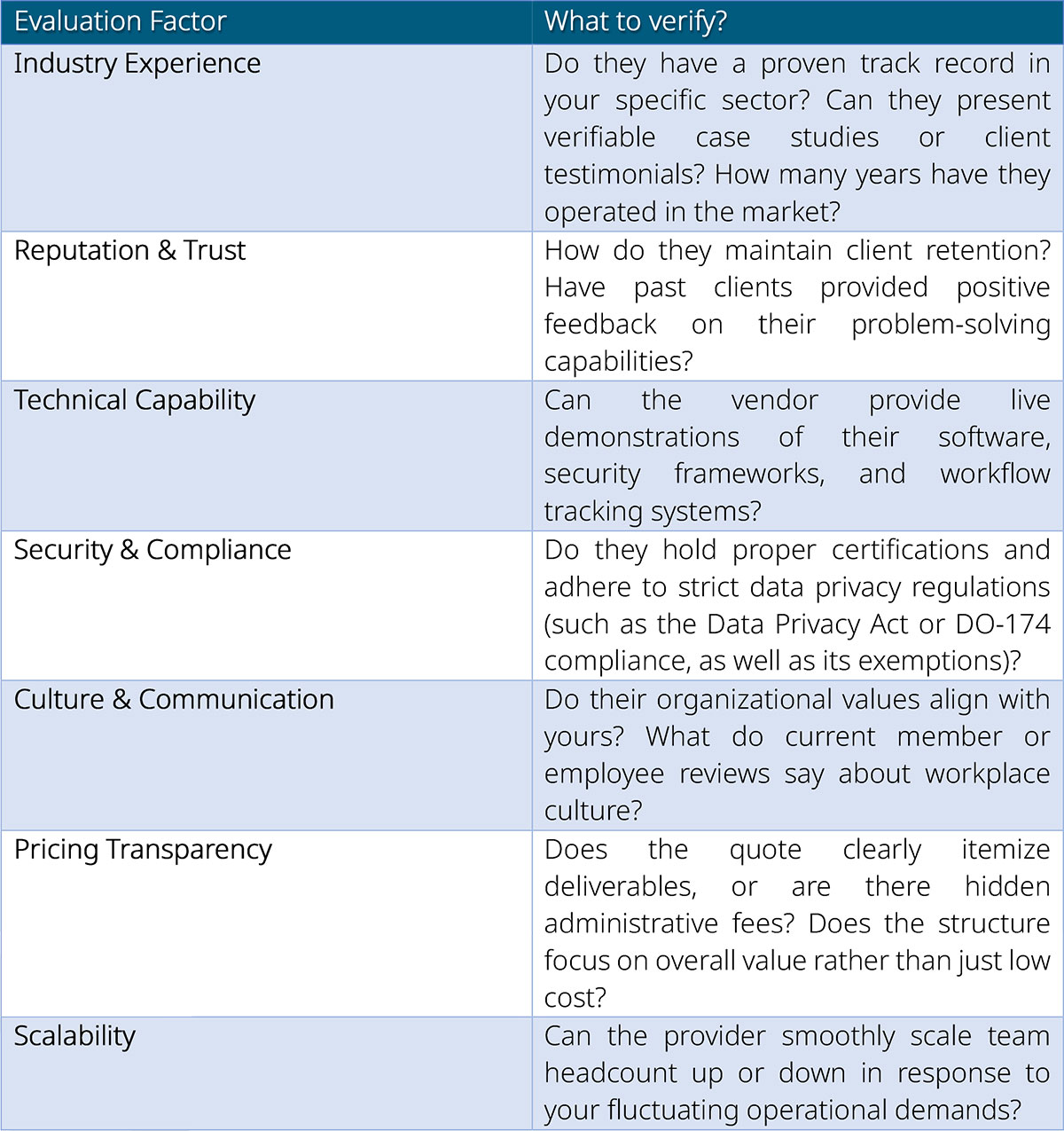
Selecting the right partner requires moving past vendors who simply offer generic, run-of-the-mill quotations. Before reaching out to prospective providers, clearly define your internal scope of work, project timelines, key performance indicators (KPIs), and expected deliverables.
When evaluating potential service providers, evaluate these key operational factors:
Strategic Implementation: Test, Measure, and Scale
Selecting the lowest price point does not guarantee an effective operational result. While reducing overhead expenses is a major benefit, the ultimate goal of outsourcing is achieving long-term operational efficiency, speed, and accuracy.
The most effective way to integrate an external partner is by starting with a structured pilot program. Establish transparent communication channels, set measurable parameters, and refine performance metrics as the project progresses. Once the provider consistently meets your quality standards and execution timelines, you can confidently scale your outsourced operations to meet your growing business needs.
Optimize Your Back-Office Operations
Looking to streamline your administrative processes without compromising quality? Partner with Grupo BPO Multipurpose Cooperative in Ortigas Center, Pasig City. Our worker-owned cooperative model ensures high retention, dedicated account ownership, and full compliance for all your Payroll Outsourcing, HR Outsourcing, and
Back-office Outsourcing needs. Contact our team today for a customized consultation.